Phone:
(701)814-6992
Physical address:
6296 Donnelly Plaza
Ratkeville, Bahamas.

Phone:
(701)814-6992
Physical address:
6296 Donnelly Plaza
Ratkeville, Bahamas.
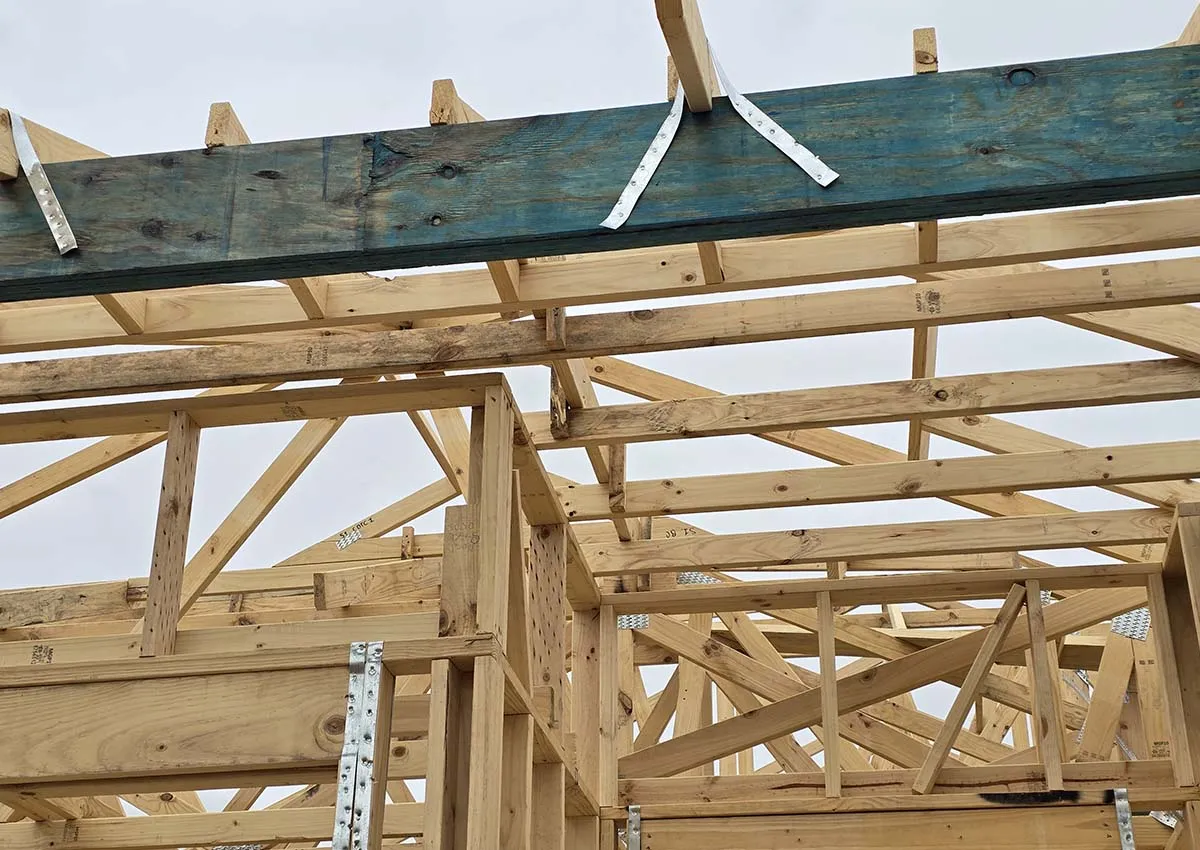
Pre-cut formwork LVL refers to Laminated Veneer Lumber components manufactured off-site to exact specifications for use as temporary moulds in concrete construction. These ready-to-install pieces eliminate on-site cutting and fitting work, allowing builders to assemble formwork systems quickly and accurately.
Laminated Veneer Lumber is an engineered timber product created by bonding multiple thin wood veneers together with adhesive under heat and pressure. Each veneer layer runs in the same grain direction, creating a material that is stronger and more consistent than solid timber. The manufacturing process removes natural wood defects like knots and splits, resulting in predictable structural performance.
The pre-cutting process happens in controlled factory environments where computer-guided machinery cuts LVL sheets and beams to precise dimensions. Builders receive components ready for immediate assembly, complete with necessary holes, notches, and edge treatments. This approach transforms formwork installation from a carpentry task into a straightforward assembly operation.
Construction professionals favour pre-cut formwork LVL over traditional materials for several compelling reasons:
Steel formwork offers strength but adds significant weight and cost. Plywood provides affordability but lacks the structural capacity for demanding applications. Pre-cut formwork LVL strikes the optimal balance between performance, handling ease, and economic value for modern construction projects.
Pre-cut formwork LVL delivers substantial time savings by arriving on site ready for immediate installation. Components manufactured to exact specifications eliminate the need for workers to measure, mark, and cut materials, allowing construction teams to focus entirely on assembly rather than preparation work.
Off-site manufacturing transforms the construction timeline by shifting the most time-consuming tasks to controlled factory environments. Precision cutting equipment produces components with tolerances measured in millimetres, ensuring each piece fits perfectly without on-site modifications. This factory-based approach means that whilst fabrication occurs, site teams can simultaneously complete groundwork and foundation tasks, creating parallel workflows that compress overall project schedules.
The assembly speed of pre-cut LVL components surpasses traditional formwork methods by significant margins. Workers simply position and secure pre-measured pieces rather than spending hours with saws and measuring tools. A formwork system that might require two days of cutting and fitting using conventional timber can often be assembled in half a day with pre-cut LVL.
Reduced on-site adjustments mean fewer delays caused by measurement errors or material shortages. When components arrive correctly sized, construction teams avoid the frustrating cycle of cutting, testing fit, and re-cutting that plagues traditional formwork installation. This predictability allows project managers to schedule subsequent trades with greater confidence.
The elimination of cutting stations on site removes another time drain. Workers no longer queue for access to saws or wait whilst colleagues complete measurements. Each team member can work continuously, maintaining momentum throughout the installation process. This uninterrupted workflow proves particularly valuable on projects with tight deadlines or staged completion requirements.
Pre-cut LVL also accelerates formwork removal and repositioning. The consistent dimensions and quality of factory-cut components mean they can be dismantled, transported to new locations, and reassembled without extensive inspection or repair. This reusability factor compounds time savings across multiple pours throughout a project’s duration.
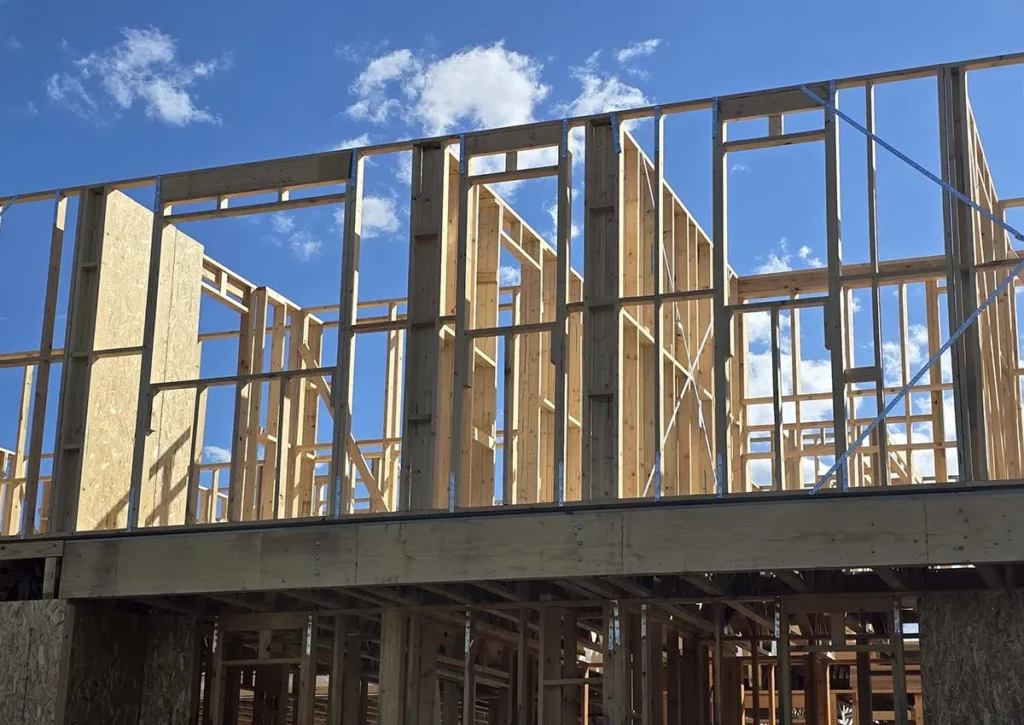
Pre-cut LVL offers significant cost savings by removing the need for skilled workers to measure, mark, and cut materials on-site. Instead, contractors receive components that are ready to be installed immediately, allowing workers to focus on assembling rather than preparing materials. This change leads to fewer hours billed for carpentry work and enables teams to complete formwork stages with fewer personnel.
Labour cost reduction becomes especially clear when comparing traditional formwork methods to pre-cut systems. In a typical formwork project using raw timber, two carpenters would spend several hours cutting beams to the required specifications. However, with pre-cut LVL, this step is completely eliminated, allowing the same project to proceed with only one worker dedicated solely to assembly. The savings in hourly rates multiply across larger projects where formwork spans multiple floors or involves complex architectural features.
Minimising material wastage directly impacts the project budget by allowing for smarter allocation of resources. Components that are cut in a factory arrive with precise dimensions, leaving minimal off-cuts that would otherwise end up in skip bins. On-site cutting methods often result in 10-15% waste due to measurement errors, blade kerf (the width of the cut made by the saw), and unusable remnants. However, with pre-cut LVL, this figure is typically reduced to below 3%, resulting in significant savings on material purchases.
The accuracy of factory cutting helps prevent expensive mistakes that often occur during fabrication on-site. If there is a single miscalculation with traditional timber, it can render an expensive beam unusable, leading to emergency orders for materials and delays in the project timeline. With pre-cut components, this risk is eliminated as computer-controlled manufacturing guarantees dimensional accuracy within millimetres.
Streamlining the installation process creates a ripple effect across various project expenses:
The predictability of pre-cut systems also enhances budget forecasting abilities. Project managers can now calculate exact quantities of materials needed and estimate labour hours required with greater confidence, thereby reducing the contingency funds that are typically set aside for uncertainties related to formwork. This level of precision allows for tighter control over costs throughout the construction phase.
Inconsistent formwork dimensions create structural vulnerabilities that compromise the entire concrete pour. When formwork components vary even slightly in size, gaps appear, concrete leaks through joints, and the finished structure develops weak points that threaten load-bearing capacity and long-term durability.
High-quality formwork begins with component uniformity. Each piece must match specifications exactly to create tight seals and maintain proper spacing. Traditional on-site cutting introduces human error—measurements drift, saw blades wander, and fatigue affects accuracy throughout the workday. These variations accumulate across multiple components, creating formwork that requires constant shimming, bracing, and adjustment.
Factory precision transforms formwork reliability. Computer-controlled cutting equipment produces pre-cut LVL components with tolerances measured in millimetres, not centimetres. Each beam, panel, and support arrives on site with identical dimensions to its counterparts. This mechanical consistency removes the guesswork from assembly.
The controlled manufacturing environment offers advantages impossible to replicate on site:
Better-fitting components create formwork systems that hold concrete exactly where engineers intended. Pre-cut LVL pieces slot together with minimal gaps, reducing the pressure required for clamping and bracing. This precise fit distributes loads evenly across the formwork structure, preventing stress concentrations that cause premature failure.
Tight joints between components serve multiple functions:
Component uniformity speeds quality inspections. When every piece matches the specification, site supervisors can verify formwork integrity quickly rather than checking each joint individually. This consistency allows crews to identify genuine problems—damaged components.
Lightweight timber formwork LVL typically weighs 30-40% less than solid timber of equivalent strength and approximately 80% less than steel alternatives. A standard LVL beam measuring 240mm x 45mm weighs around 8-10kg per metre, whilst comparable steel formwork can exceed 40kg per metre.
The reduced weight transforms site manoeuvrability in practical ways. Workers can carry and position LVL components without requiring mechanical lifting equipment for most applications. A two-person crew easily handles pieces that would demand four workers or machinery with traditional materials. This independence from heavy equipment means formwork installation proceeds without waiting for crane availability or coordinating multiple trades.
Ease of transport extends beyond the construction site itself. Delivery lorries carry larger quantities of pre-cut LVL in a single load compared to heavier alternatives, reducing freight costs and the number of deliveries required. Unloading happens faster with manual handling rather than crane-assisted operations, minimising site disruption and vehicle turnaround times.
The physical demands on workers decrease significantly when handling lighter materials throughout the day. Reduced fatigue leads to sustained productivity levels and fewer workplace injuries related to manual handling. Sites report faster installation rates as crews maintain consistent work pace without the physical strain associated with heavier formwork systems.
Speed advantages compound across multiple construction activities:
The combination of reduced weight and pre-cut precision creates a workflow where installation speed increases whilst physical demands on labour decrease. Construction schedules compress as formwork activities that previously required full days complete in hours, allowing concrete pours to proceed on tighter timelines.
Pre-cut formwork LVL delivers exceptional structural performance through its superior strength-to-weight ratio, making it suitable for demanding construction applications. The engineered layering process creates a material that outperforms solid timber in load-bearing capacity whilst maintaining a manageable weight profile.
The manufacturing process bonds multiple thin veneers with grain running parallel, eliminating natural timber weaknesses like knots and splits. This engineering approach produces consistent strength properties throughout each piece, allowing builders to rely on predictable performance across entire projects. LVL can handle significant loads without requiring the bulk of traditional timber beams or the excessive weight of steel alternatives.
Durability treatments extend LVL’s service life and expand its application range. Pressure treatment processes protect against:
These protective measures transform LVL from a standard building material into a long-lasting formwork solution that maintains structural integrity through multiple pours and reuses.
Design flexibility stands out as a defining characteristic of pre-cut formwork LVL. The material adapts seamlessly to both heritage restoration projects requiring traditional joinery methods and contemporary builds featuring complex geometric forms. Manufacturers can cut LVL to precise custom dimensions, accommodating curved walls, angled supports, and intricate architectural details that would prove challenging with rigid materials.
The uniform composition allows for reliable fastening and joining techniques. Builders can confidently nail, screw, or bolt LVL components without concerns about hitting weak spots or causing splits. This predictability speeds up formwork assembly whilst ensuring secure connections that withstand concrete pouring pressures.
LVL’s dimensional stability across varying humidity levels prevents warping and twisting that plague natural timber. Forms maintain their shape throughout the concrete curing process, producing accurate finished surfaces that require minimal correction work.
Pre-cut LVL generates significantly reduced waste because components arrive on site already cut to exact specifications. Factory-controlled cutting eliminates the guesswork and measurement errors that typically produce unwanted off-cuts and scrap material.
Traditional on-site cutting often results in 15-20% material waste from miscalculations, damaged pieces, and unusable remnants. On the other hand, pre-cut formwork LVL reduces this figure to as little as 2-5%. Each component is manufactured using computer-controlled precision equipment that optimises material usage. The factory environment allows for better planning of cutting patterns, ensuring maximum yield from each LVL sheet.
Cleaner work areas emerge as a direct benefit of this precision manufacturing approach. Construction sites using pre-cut components experience:
The organised site environment improves safety conditions and allows workers to move more efficiently between tasks. Teams spend less time navigating around scrap piles or clearing debris from work areas.
Less scrap material translates directly into lower disposal costs. Construction waste removal typically charges by volume or weight, with skip hire and landfill fees representing substantial project expenses. Pre-cut LVL reduces these costs by up to 70% compared to traditional formwork materials that require extensive on-site modification.
Environmental compliance becomes simpler with reduced waste generation. Many jurisdictions impose strict regulations on construction waste management, including sorting requirements and disposal documentation. Fewer off-cuts mean less administrative burden and reduced risk of non-compliance penalties.
The financial impact extends beyond immediate disposal savings. Sites generate less waste to store temporarily, reducing the space needed for skip bins and waste containers. This freed-up area can accommodate additional materials or equipment, improving site logistics and workflow efficiency. Understanding why pre-cut formwork LVL saves time and money on site includes recognising these waste-related advantages that compound throughout the construction timeline.
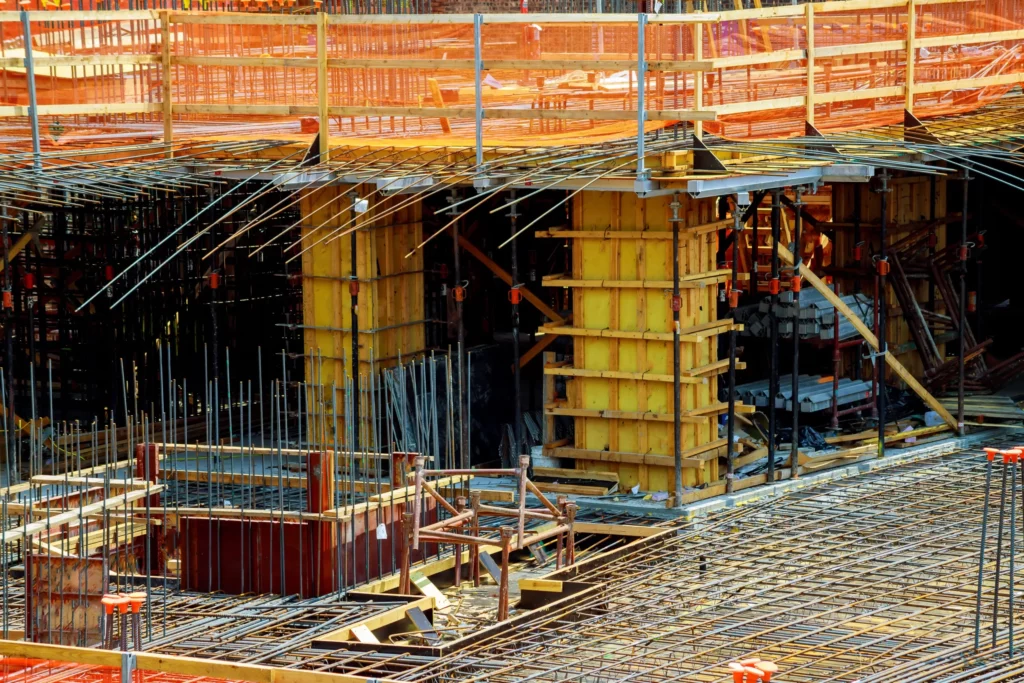
Pre-cut formwork LVL delivers energy efficiency benefits that extend well beyond the construction phase through its natural thermal insulation properties. Timber-based LVL possesses inherent insulating characteristics that metal alternatives like steel or aluminium simply cannot match, creating a thermal barrier that reduces heat transfer during and after the building process.
How do LVL’s thermal insulation properties compare to metal formwork?
The cellular structure of timber gives LVL a thermal conductivity approximately 400 times lower than steel. When used as formwork, this means:
Metal formwork conducts heat rapidly, creating cold spots and potential condensation issues. LVL maintains more consistent temperatures, protecting concrete during critical curing periods and contributing to better structural outcomes.
What indirect energy savings can buildings achieve through LVL use?
Buildings constructed with LVL-based formwork systems often demonstrate improved thermal performance in their final state. The timber components can remain integrated into certain structural elements, providing ongoing insulation value. This translates to reduced heating and cooling demands throughout the building’s operational life.
Energy consumption studies show that structures incorporating timber elements require 15-20% less climate control energy compared to purely steel-framed equivalents. The insulating properties of LVL help maintain stable internal temperatures, reducing the workload on HVAC systems and lowering utility costs for building occupants.
How does pre-cut LVL align with sustainable building practices?
Pre-cut formwork LVL represents a cornerstone of sustainable building methodology through multiple environmental pathways. Timber is a renewable resource that sequesters carbon throughout its lifecycle, unlike energy-intensive steel or concrete production processes.
The manufacturing process for LVL generates significantly lower carbon emissions:
Using energy efficient materials like LVL demonstrates commitment to green building certifications such as LEED or BREEAM. Projects incorporating timber-based formwork earn sustainability credits while.
Pre-cut formwork LVL offers clear benefits that directly tackle the two main challenges of construction: tight schedules and budgets. The precise manufacturing process eliminates delays caused by cutting on-site, while factory-controlled dimensions ensure that components fit perfectly from the start, leading to significant time savings in every stage of the project.
Cost benefits from using pre-cut formwork LVL go beyond just reducing labour hours. When components arrive already cut to exact specifications, material waste decreases significantly, disposal costs go down, and fewer workers spend less time installing formwork. These savings accumulate throughout the construction timeline, improving profit margins without compromising the quality of the structure.
Construction efficiency with pre-cut formwork LVL comes from several factors working together:
Projects that use pre-cut formwork LVL consistently finish faster while still meeting strict quality standards. The engineered reliability of this material removes uncertainty from formwork operations, allowing project managers to plan with confidence and contractors to work more efficiently.
Why pre-cut formwork LVL saves time and money on site becomes clear when looking at the entire project lifecycle. Every hour saved on installing formwork speeds up subsequent construction phases. Every pound saved on labour and materials makes the project more viable. Every reduction in waste supports environmental responsibilities.
Construction teams looking for a competitive edge should consider using pre-cut formwork LVL instead of traditional methods. The evidence supporting its use includes practical handling benefits, economic performance, and structural reliability—making it a smart choice for modern construction projects that require both speed and quality.
Pre-Cut Formwork LVL (Laminated Veneer Lumber) refers to engineered timber components that are precisely cut off-site for use in formwork. It plays a vital role in construction by providing strong, uniform, and ready-to-use formwork elements. LVL is preferred over traditional materials due to its engineered strength, consistency, and efficiency.
Pre-Cut Formwork LVL saves time by utilising off-site manufacturing which ensures precision cutting and reduces the need for on-site adjustments. This leads to faster assembly as components are ready-to-use, significantly shortening construction timelines and improving overall project efficiency.
Using Pre-Cut LVL reduces labour costs by minimising the need for measuring, cutting, and fitting on-site. It also decreases material wastage due to fewer errors and off-cuts. The streamlined installation process contributes to lower overall expenses, making projects more cost-effective.
Quality and consistency in formwork are crucial for structural integrity and build quality. Pre-Cut LVL ensures this through factory precision cutting which guarantees uniform component dimensions. Better fitting components lead to improved build quality and reliable performance on site.
LVL’s lightweight timber composition makes it easier to transport and manoeuvre on site compared to traditional timber or steel alternatives. This ease of handling accelerates construction activities by reducing physical strain and improving site efficiency.
Pre-Cut Formwork LVL boasts an excellent strength-to-weight ratio combined with durability treatments such as termite resistance. Its design flexibility allows adaptation for a variety of traditional and modern building designs, making it suitable for diverse construction requirements.
See more about: Keeping Workers Cool: The Role of scaffold shade cloth